Hi, I'm Meghana Dixit
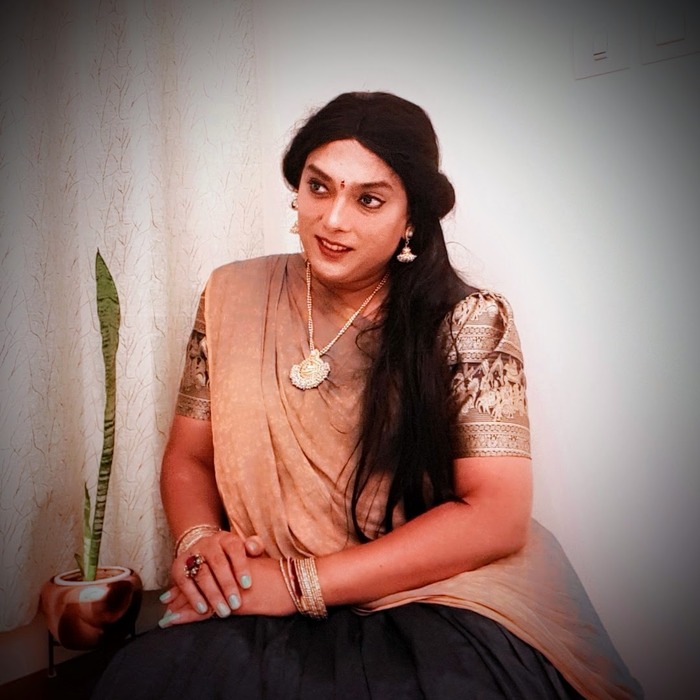
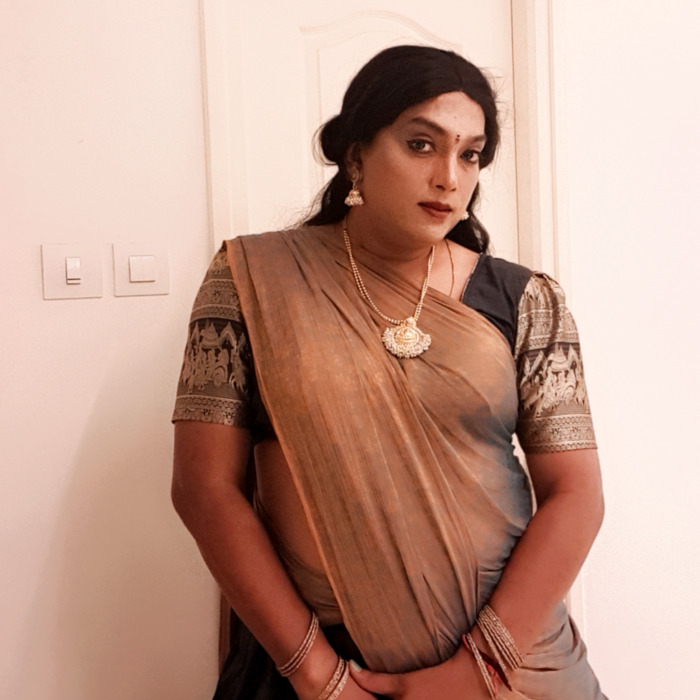
I am an Artist, who considers crossdressing as an Art !!! With Passion For Makeup, Glamour and Style. I myself am made of entirely of flaws, stitched together with good intensions.
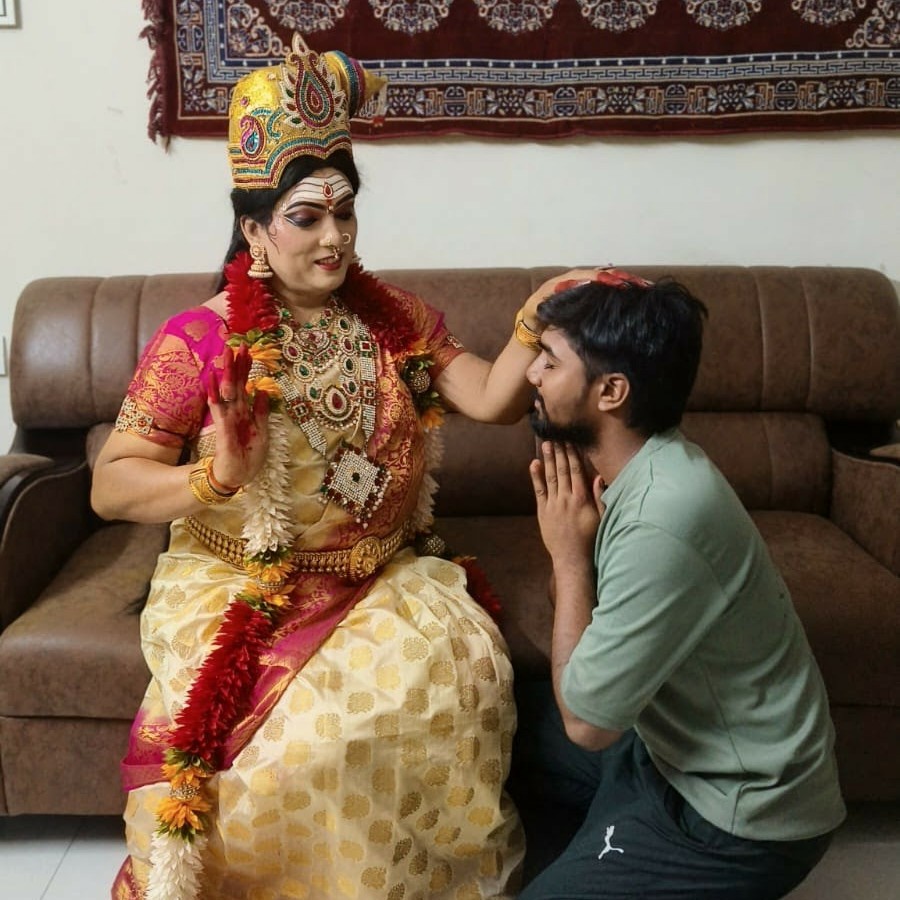
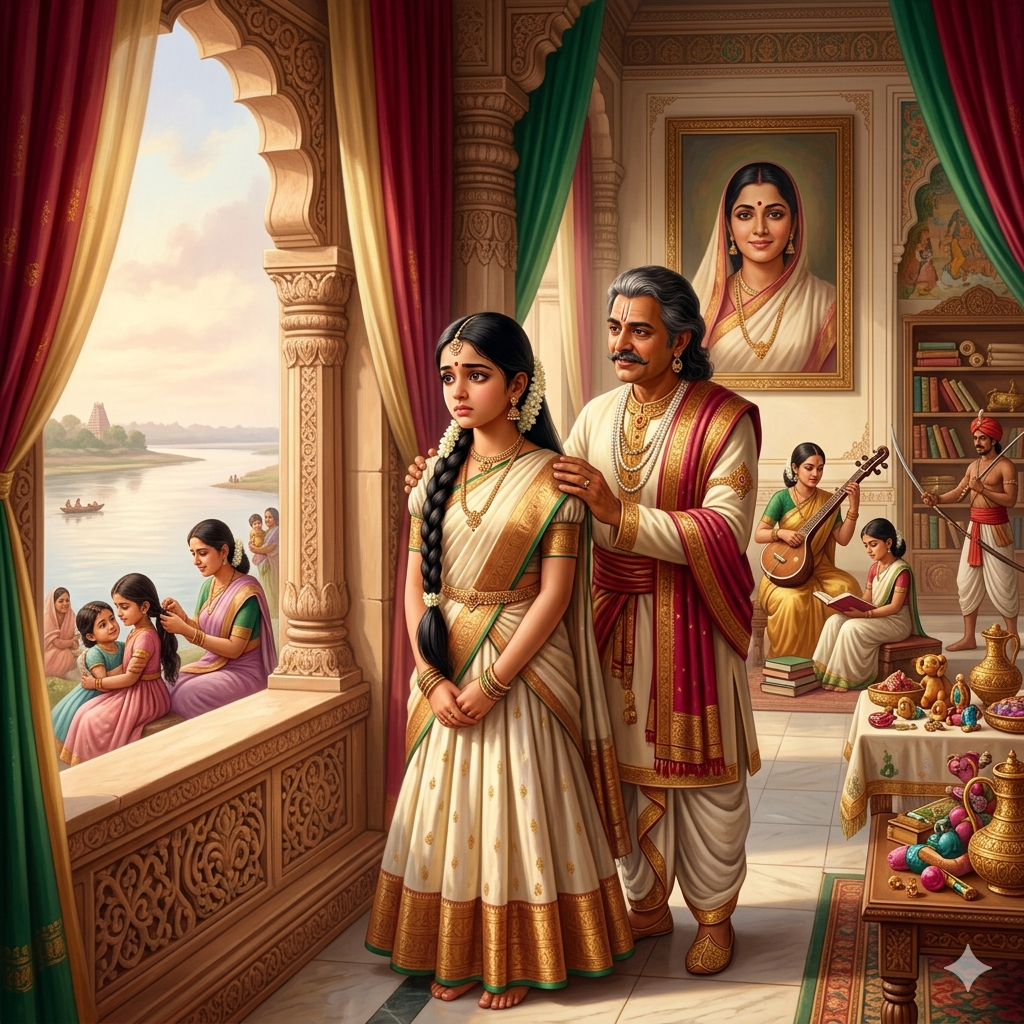
In the prosperous kingdom of Rajamahendravaram, Raja Ravindra was blessed with a daughter, Amuktha, late in his life but lost his beloved queen during childbirth. Raised with immense love and given the finest education, Amuktha grew into a courageous and intelligent young woman. When the aging king handed over the throne to her, she introduced sweeping reforms to empower women and appointed them to positions of power across the kingdom. However, these changes gradually created tensions within society, causing concern for Raja Ravindra, who feared that the harmony of his kingdom was being disturbed. As Queen Amuktha's influence grew, so did the challenges that would shape the future of Rajamahendravaram.
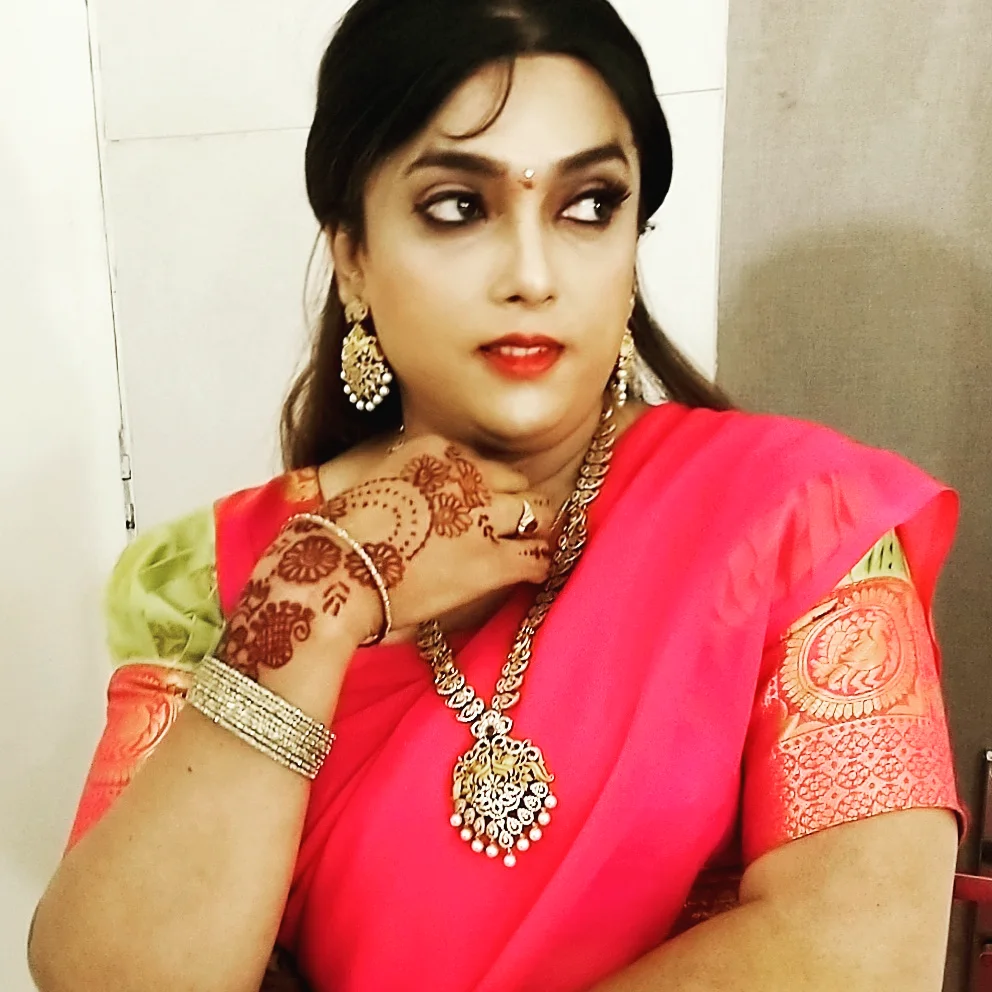
I am an Artist, who considers crossdressing as an Art !!! With Passion For Makeup, Glamour and Style. I myself am made of entirely of flaws, stitched together with good intensions.
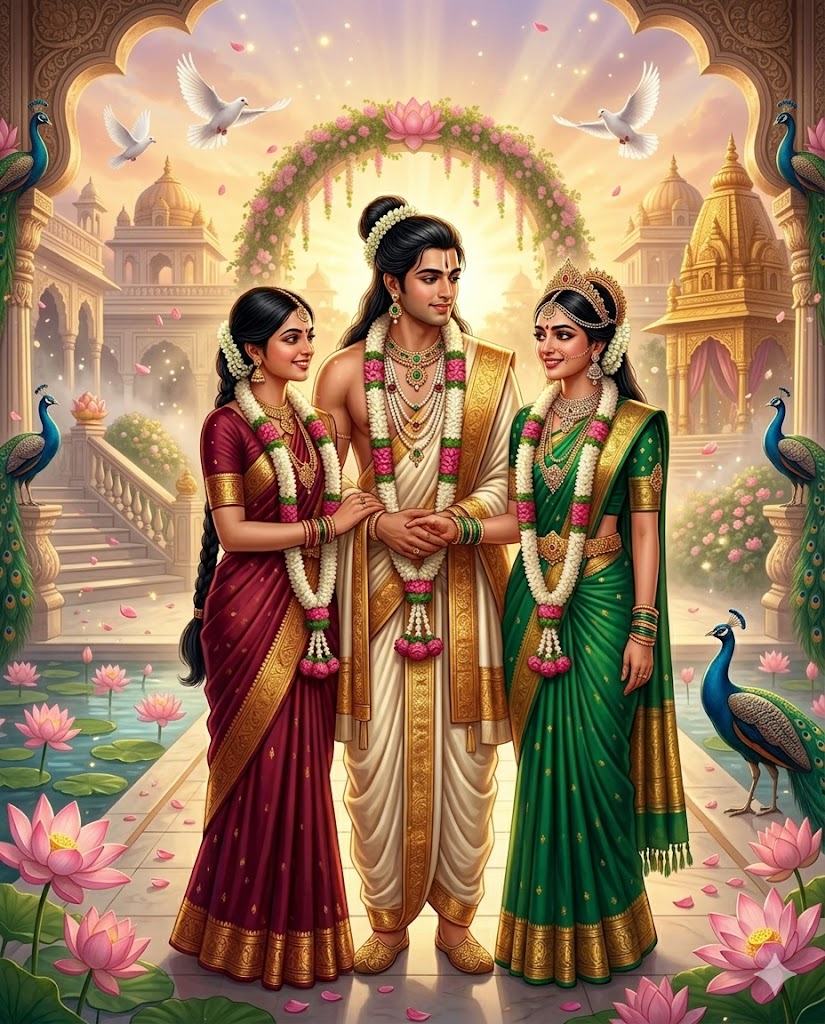
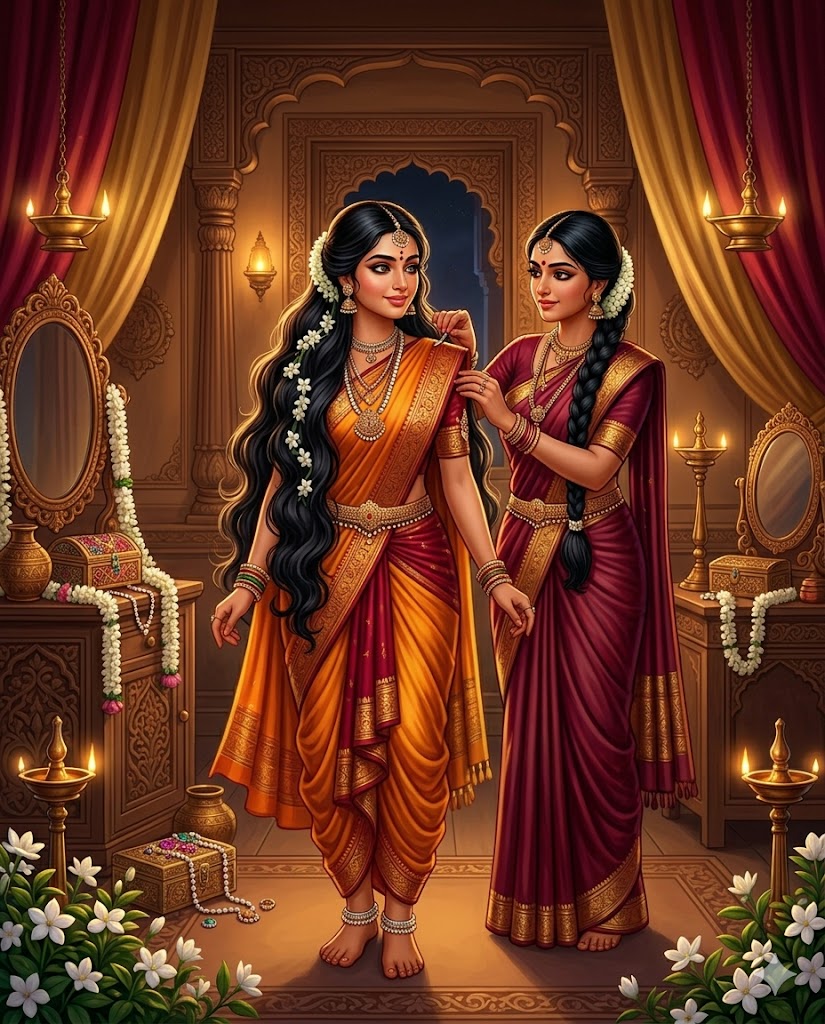
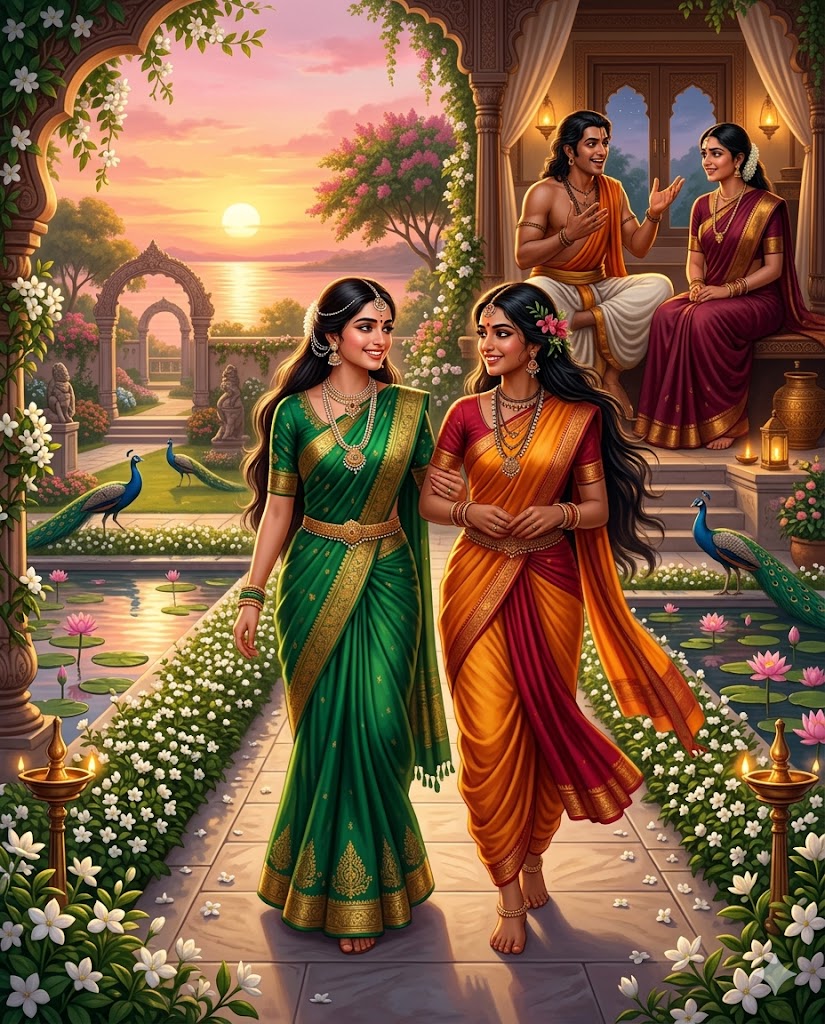
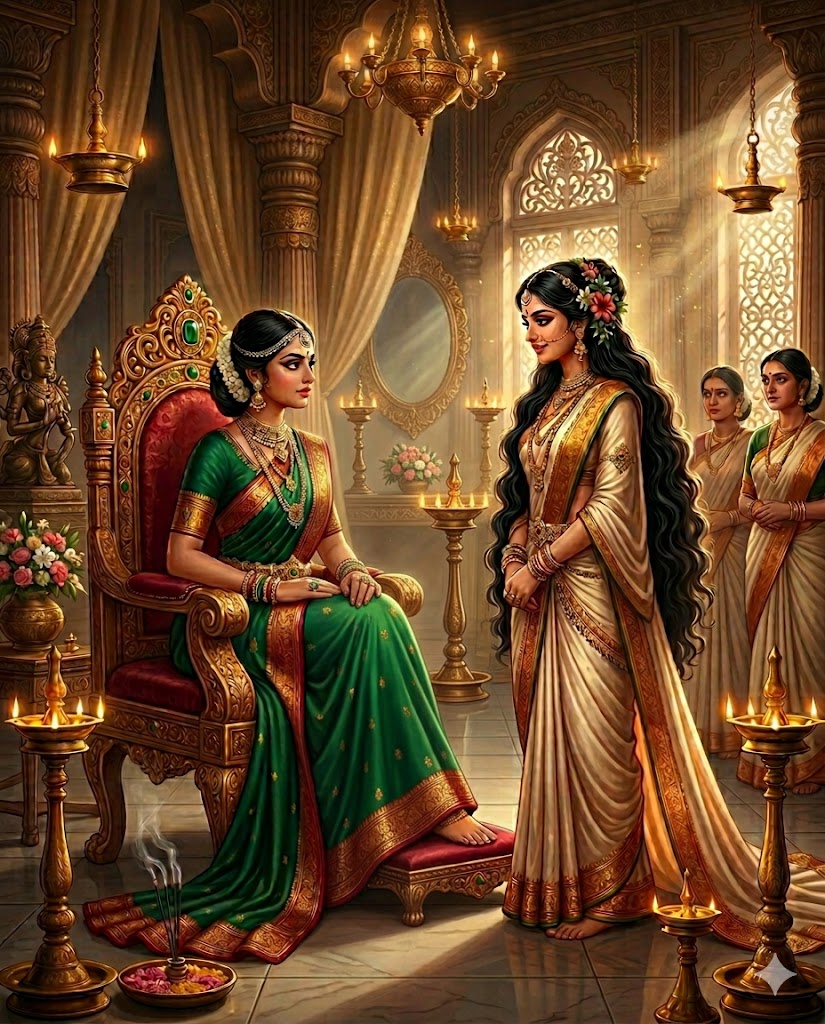
Long ago, on the fertile banks of the sacred River Godavari, stood the prosperous princely kingdom of Rajamahendravaram. It was a land blessed by nature and nourished by culture. Vast emerald-green paddy fields stretched as far as the eye could see. Coconut groves swayed gently in the cool river breeze. Merchants from distant lands arrived at its bustling markets, bringing silks, spices, precious gems, and stories from across the seas.
The people of Rajamahendravaram lived peacefully and happily. They worshipped in magnificent temples whose bells echoed through the morning mist. Farmers worked diligently in their fields, craftsmen created beautiful works of art, and scholars gathered in royal halls to discuss philosophy, astronomy, and literature.
At the heart of this flourishing kingdom stood a magnificent palace built from white stone and decorated with intricate carvings depicting the glorious history of the kingdom's ancestors.
The ruler of this prosperous land was Raja Ravindra.
Raja Ravindra was respected not merely because he wore a crown, but because he possessed wisdom, patience, and compassion. He was known as a king who listened before he spoke and thought before he acted. Under his rule, disputes were settled fairly, taxes remained reasonable, and no family slept hungry.
For decades he ruled Rajamahendravaram with justice and honor.
The people loved him deeply.
Whenever he traveled through the streets, flowers were showered upon him. Children ran behind his royal elephant, cheering his name, while elderly citizens folded their hands in respect.
Yet despite all his achievements, one sorrow quietly lived within the king's heart.
For many years, Raja Ravindra and his beloved queen remained childless.
The royal family prayed in temples, performed sacred rituals, and offered generous donations to holy men. As years passed, hope slowly faded.
Then, when Raja Ravindra was already in his late sixties, a miracle arrived.
The queen became pregnant.
The entire kingdom celebrated.
Temple bells rang continuously for days. Lamps illuminated every street. The citizens believed that the gods themselves had answered the king's prayers.
Months later, on a stormy monsoon night, the palace was filled with both joy and grief.
A beautiful baby girl was born.
But the queen did not survive the childbirth.
The newborn princess's first cry echoed through the palace at the same moment the kingdom lost its beloved queen.
The celebrations instantly turned into mourning.
Raja Ravindra stood beside the queen's chamber, holding his tiny daughter in trembling arms while tears streamed down his face.
The little girl had brought him the greatest joy and the deepest sorrow of his life.
He named her Amuktha.
From that day onward, Raja Ravindra devoted himself completely to raising his daughter.
He refused to let her feel the absence of a mother.
Whatever Amuktha desired was provided.
If she wanted the finest silk garments, they were brought from distant kingdoms.
If she wished to learn music, the greatest musicians were summoned.
If she wanted to study warfare, experienced generals trained her personally.
Unlike many princesses of her era, Amuktha was encouraged to learn sword fighting, horse riding, archery, statecraft, and military strategy.
The king wanted her to become strong.
He feared that after his death she would have no one to protect her.
"Power should belong to those who are capable," he would often tell her. "Not to men. Not to women. Only to those who can serve the people."
As Amuktha grew older, her beauty became renowned throughout neighboring kingdoms.
She possessed large expressive eyes, long flowing hair, and a commanding presence that naturally drew attention.
But more than her beauty, people spoke of her courage.
She rode horses fearlessly.
She hunted wild boars in dense forests.
She challenged experienced warriors during practice sessions and often defeated them.
The people admired her confidence.
Yet there was another side to the young princess.
Having grown up without a mother and seeing the hardships many women faced in society, Amuktha developed strong opinions.
She often witnessed women being denied opportunities.
She listened to stories of widows suffering in silence.
She heard complaints from women who felt ignored by powerful men.
Gradually, these experiences shaped her thinking.
She began believing that men had controlled society for too long.
The king noticed this change.
At first, he thought it was merely youthful idealism.
But as years passed, her opinions became stronger.
Whenever court ministers disagreed with her, she assumed they were dismissing her because she was a woman.
Whenever a nobleman criticized one of her ideas, she viewed it as proof of male arrogance.
Raja Ravindra attempted to teach balance.
"Power should belong to those who are capable," he would often tell her. "Not to men. Not to women. Only to those who can serve the people."
Amuktha would respectfully listen.
But deep inside, she believed society needed a dramatic change.
Years passed.
The king entered his eighties.
Age gradually weakened his body.
His hair turned completely white, and his once-powerful voice became softer.
Although his mind remained sharp, he knew his time as ruler was coming to an end.
The kingdom needed a new sovereign.
According to royal law, Princess Amuktha was the rightful heir.
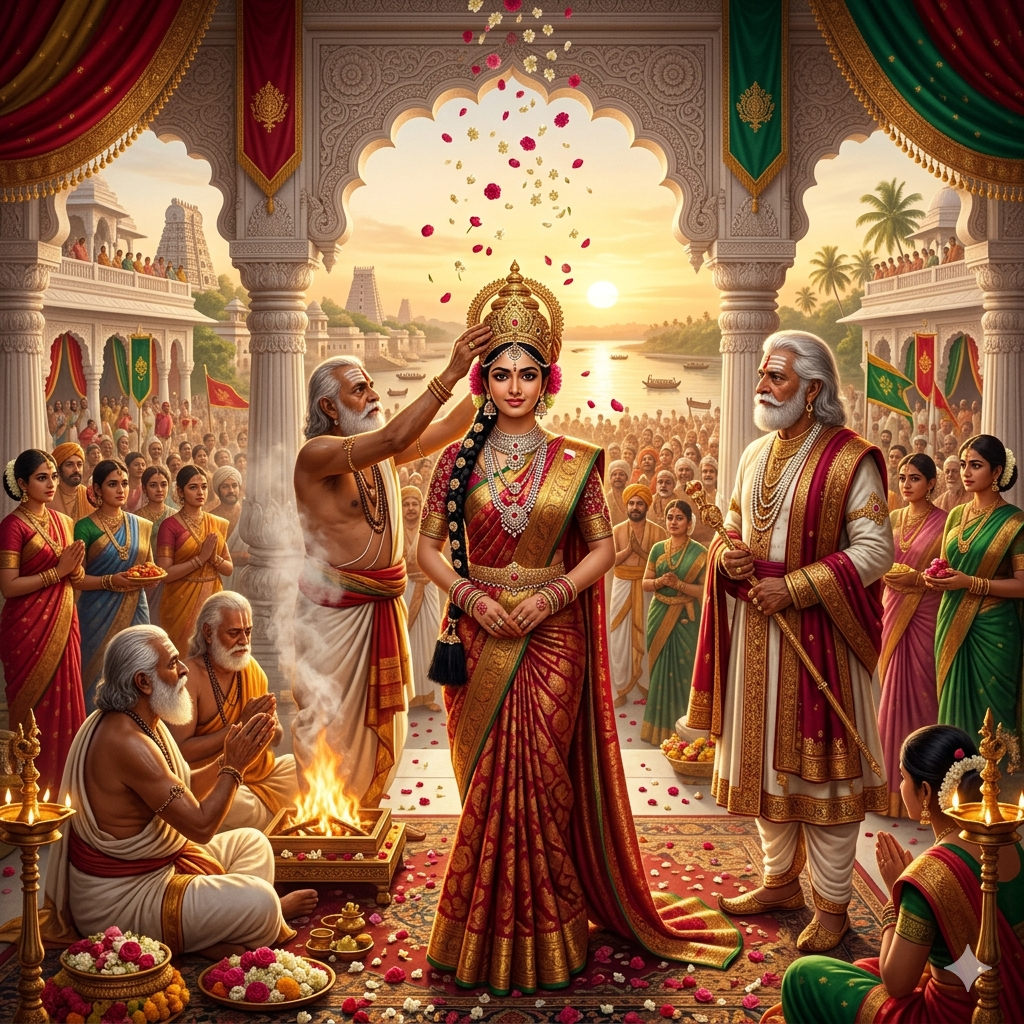
A grand coronation ceremony was arranged.
Thousands gathered from every corner of Rajamahendravaram.
Priests performed sacred rituals.
The royal crown, adorned with precious gems, was placed upon Amuktha's head.
The crowd cheered as she became Maharani Amuktha Devi of Rajamahendravaram.
The elderly Raja Ravindra stepped aside and entrusted the kingdom to his daughter.
Initially, the people welcomed the change.
Many were excited to see a young and energetic ruler ascend the throne.
Amuktha immediately began implementing reforms.
Some of them were praised.
She established schools specifically for girls.
She encouraged women to learn professions traditionally reserved for men.
She appointed women to positions within the palace administration.
The people applauded these measures.
But soon, her reforms became increasingly radical.
Believing that the old royal court represented centuries of male dominance, Amuktha dismissed many experienced ministers, advisors, military commanders, and administrators.
Several of these men had served the kingdom faithfully for decades.
Regardless of their achievements, they were removed.
In their place, Amuktha appointed an entirely new council composed almost exclusively of women.
Most of these women were loyal to the queen.
However, many lacked experience in governance, finance, diplomacy, or military affairs.
When senior officials attempted to offer advice, they were ignored.
The queen believed that experience was less important than correcting historical injustice.
The atmosphere within the palace began to change.
Long-standing traditions were abandoned.
Veteran ministers who once guided the kingdom's prosperity now stood outside palace gates, watching younger and inexperienced officials make decisions.
Some citizens supported the transformation.
Others became concerned.
The effects soon spread beyond the palace walls.
In towns and villages, people began copying the behavior of the royal court.
Many women interpreted the queen's policies as encouragement to dominate rather than seek equality.
Arguments within households increased.
Mutual respect slowly gave way to competition.
Instead of working together as families, husbands and wives increasingly viewed each other as rivals.
Village elders who once mediated disputes found themselves facing conflicts unlike any they had seen before.
The kingdom slowly divided into camps.
Some openly celebrated the new order.
Others quietly feared its consequences.
What had begun as a movement for empowerment was gradually transforming into a struggle for supremacy.
From his private chambers, the aging Raja Ravindra observed everything.
Though retired from power, he still loved his kingdom deeply.
Every day he received reports from trusted servants, former ministers, and concerned citizens.
The stories troubled him.
He had always dreamed of a kingdom where men and women respected one another.
Instead, he now saw growing resentment on both sides.
One evening, as the sun disappeared behind the Godavari and painted the sky in shades of orange and gold, the old king stood on a palace balcony.
His frail hands rested upon the stone railing.
Below him, the kingdom remained beautiful.
The river still flowed peacefully.
Temple bells still echoed through the evening air.
But beneath that beauty, he sensed unrest.
A kingdom could survive droughts.
A kingdom could survive wars.
A kingdom could survive invasions.
But when its own people began turning against one another, the danger became far greater.
Raja Ravindra closed his eyes and whispered a silent prayer.
"Great gods, give me wisdom. My daughter's intentions may be noble, but the path she walks threatens the harmony of this land. Before I leave this world, I must find a way to restore balance."
As darkness covered Rajamahendravaram, the old king began contemplating a plan—one that could either save the kingdom or create the greatest conflict it had ever witnessed.
And thus began the most important chapter in the history of Rajamahendravaram.
P.S: This is purely a work of fiction and no resemblance to the historical characters is intended.








Wow.. What a start akka.. Curious to know how you will characterise Gajagamini character..
Thank you for your comment 😍Akka, chala bagundi story begining.. Maa kosam Telugu lo rayochhu kada ee story.. Manchiga chandamama kathalavuntundi.. Migatha parts twaraga post cheyandi
Thank you for your comment 😍His sis, thanks for starting writing stories again after a long gap..looking forward to read the remaining parts of the story soon.
Thank you for your comment 😍